
Banking peripheral-blood immune cells under controlled conditions.
Beike isolates and cryopreserves peripheral-blood immune-cell fractions, including T and NK cells, under a defined banking programme. Storage maintains a personal cell resource for potential future processing; it does not establish that a future therapy will be available, approved or suitable.
Reasons organisations and individuals consider earlier collection.
Earlier collection
Cell characteristics can vary with age, health and collection conditions. Actual identity, viability and function require testing of the collected material.
Personal cell resource
Autologous, identity-matched starting material that may avoid donor matching; clinical risks still depend on the eventual process and use.
Defined release checks
Identity, viability and programme-specific requirements are assessed when material is prepared or released.
Long-term availability
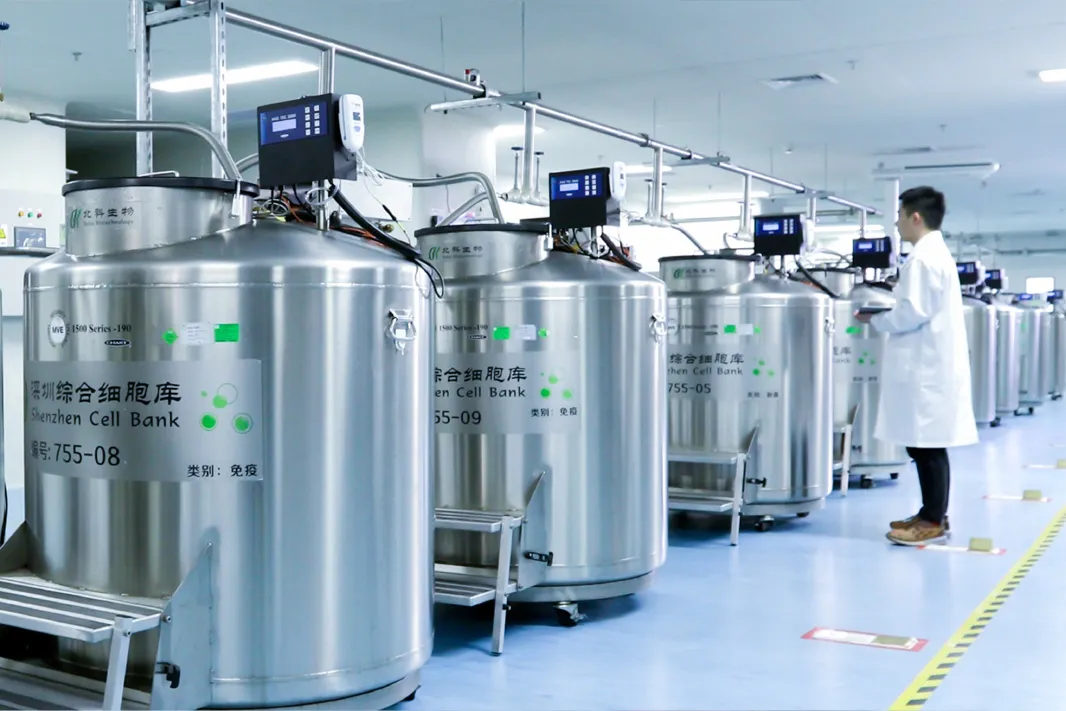
Vapor-phase liquid nitrogen storage with redundant monitoring and full chain-of-custody.
From blood draw to long-term biobank in four steps.
- 01
Health screen
Pre-storage health and infectious-disease screening.
- 02
Blood draw
Standard peripheral-blood draw at a partner clinical site.
- 03
Isolation & QC
Immune-cell isolation, characterisation and quality testing in our cleanroom suite.
- 04
Cryopreservation
Controlled-rate freezing and long-term vapor-phase nitrogen storage.
What you keep in the bank, and under what conditions.
- Cell types stored
- Peripheral-blood mononuclear cells (PBMC), enriched T cell and NK cell fractions.
- Source material
- Standard peripheral-blood draw (≈ 50–100 mL), single visit.
- Storage condition
- Vapor-phase liquid nitrogen, ≤ –150 °C, redundant monitoring with multi-site backup.
- Quality framework
- Management systems and accreditation are applied only within their current documented facility and activity scope.
- Traceability
- Per-dose chain-of-custody record; identity verified at deposit and at every recall.
- Storage term
- Defined by the storage contract; identity and viability are checked under the applicable release procedure.
What people most often ask before they store.
Who is a good candidate for immune-cell storage?
Adults considering storage of a personal immune-cell resource. Collection suitability is assessed during screening; this is separate from eligibility for any future treatment.
How long are the cells usable?
The contractual storage term and monitoring arrangements should be confirmed before storage. Identity and viability are checked under the applicable release procedure.
What can the cells be used for later?
Potential future processing depends on cell condition, scientific evidence, the receiving institution, the intended use and the regulatory requirements in force at that time.
What happens if I move cities?
The biobank is part of the Comprehensive Cell Bank network; access and recall are coordinated across Regional Cell Preparation Centers in six macro regions.
How is immune-cell storage different from stem-cell storage?
Mesenchymal stromal cells, hematopoietic stem cells and immune cells have different biological roles and potential uses. Storage terms, evidence and permitted release conditions must be assessed separately for each cell type.