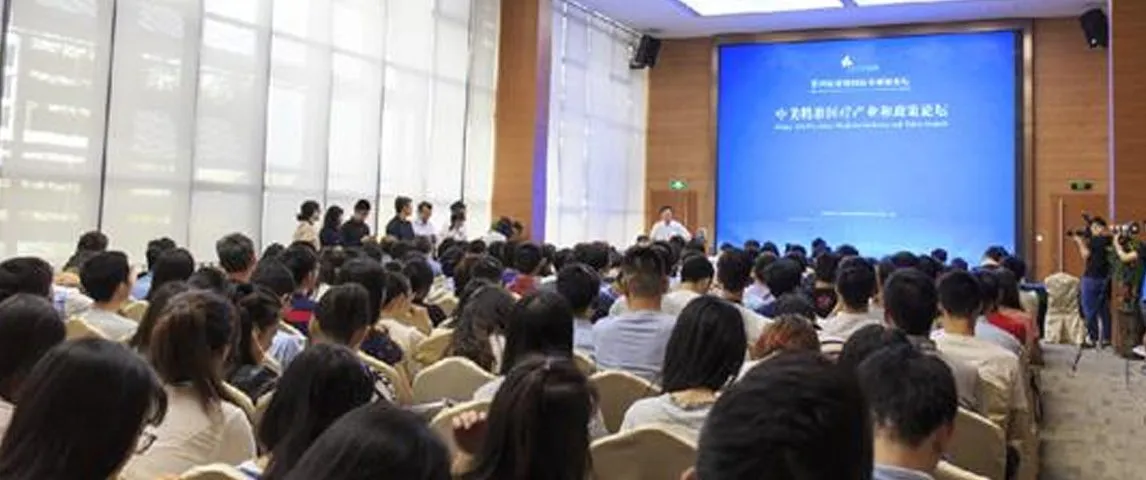
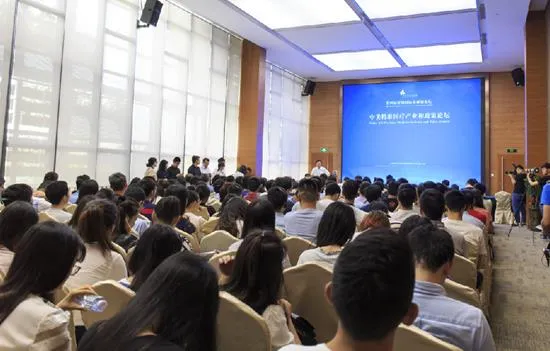
On June 13, 2016, the China-US Precision Medicine Industry and Policy Forum was held in grand fashion at the Shenzhen International Low Carbon City. As a pioneer and leader in the clinical translation of biotherapy technologies, Beike Biotech was invited to attend. The forum was hosted by Tang Jie, former Vice Mayor of Shenzhen, and was attended by Liao Shuhua, Deputy Secretary of the Shenzhen Municipal Health and Family Planning Commission; Cai Yu, Deputy Director of the Shenzhen Development and Reform Commission; Hu Xiang, Chairman of Beike Biotech; and more than 200 other officials, experts, and industry professionals. As a featured guest, Dr. Hu Xiang delivered an outstanding keynote at the forum and discussed the development of the precision medicine industry and its future prospects with experts from across the field.
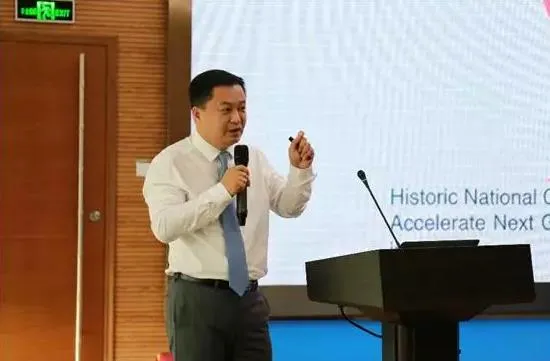
Dr. Hu Xiang, Chairman of Beike Biotech, gave a keynote on the theme of "The Precision Medicine Industry Ecosystem", sharing the current state of biotechnology and industrial policy as well as the development and transformation of Beike Biotech. Precision medicine is a cutting-edge approach to disease treatment and prevention that puts patients at the center; its individualized advantages will gradually transform the current medical paradigm. Industrial policy and regulations and the industry environment are the foundation of the development of precision medicine. The current situation can no longer meet industry development needs and has even become an obstacle to development. Dr. Hu Xiang believes that "precision medicine is not only an innovation in science and an innovation in technology — what matters most is the existence of an enabling industry environment".
Dr. Hu Xiang pointed out that the era of precision medicine has arrived. Beyond technological breakthroughs, the removal of ethical barriers, and policy and regulatory innovation, supporting infrastructure is an indispensable foundation. For precision medicine, it is particularly important to "lay" a "highway network" connecting clinical demand with advanced technology supply — one that meets the timeliness of clinical needs while also supporting production at scale. Shenzhen's innovative environment and the support of the city government have transformed the growth curve of biotechnology companies, enabling Beike Biotech to evolve from a purely R&D-focused enterprise into a platform-based, open enterprise. Over the past ten years, Beike Biotech has built infrastructure for personalized cell therapy, establishing a precision and personalized cell therapy clinical translation network covering East China, Northwest China, Southwest China, North China, and South China — a national "Comprehensive Cell Bank + Regional Cell Preparation Center" network — providing innovative public technology platforms and infrastructure for the clinical translation of precision medicine technologies.
The forum also invited a number of distinguished experts, including Shi Lizheng, Endowed Chair Professor of Pharmacoeconomics at Tulane University and an international internal medicine specialist; Clifford Goodman, former President of the International Society for Pharmacoeconomics and Outcomes Research and Senior Vice President at The Lewin Group; Ma Jing, Professor at Harvard Medical School and Chair of the China-US Health Summit; Zhao Guoqing, Vice President of Guangdong Women and Children Hospital; A. Mark Fendrick, Professor of Internal Medicine and of Health Management and Policy at the University of Michigan; and Huang Cheng, Executive Dean of the School of Management, Harbin Institute of Technology. They delivered excellent keynotes on topics related to precision medicine — including the doctor-patient relationship, big data, innovative healthcare insurance payment, and bioeconomy development — providing a comprehensive comparison of the national strategies of China and the United States and an in-depth exchange on investment, policy guidance, and regulation in the precision medicine industry.