
In recent years, with the development of stem cell technology, deepened understanding, and accumulated experience, stem cell therapy has gradually become a major hotspot in biomedicine. To standardize and guide non-clinical research and evaluation of human-derived stem cell products, the Center for Drug Evaluation (CDE) of the National Medical Products Administration, on October 7, 2023, issued a notice publicly soliciting opinions on the Technical Guiding Principles for Non-Clinical Research of Human-Derived Stem Cell Products (Draft for Comments) (hereinafter the "Guiding Principles"). The Guiding Principles make clear that organoid technology can provide useful supplementary information for the non-clinical efficacy and safety evaluation of human-derived stem cell products.
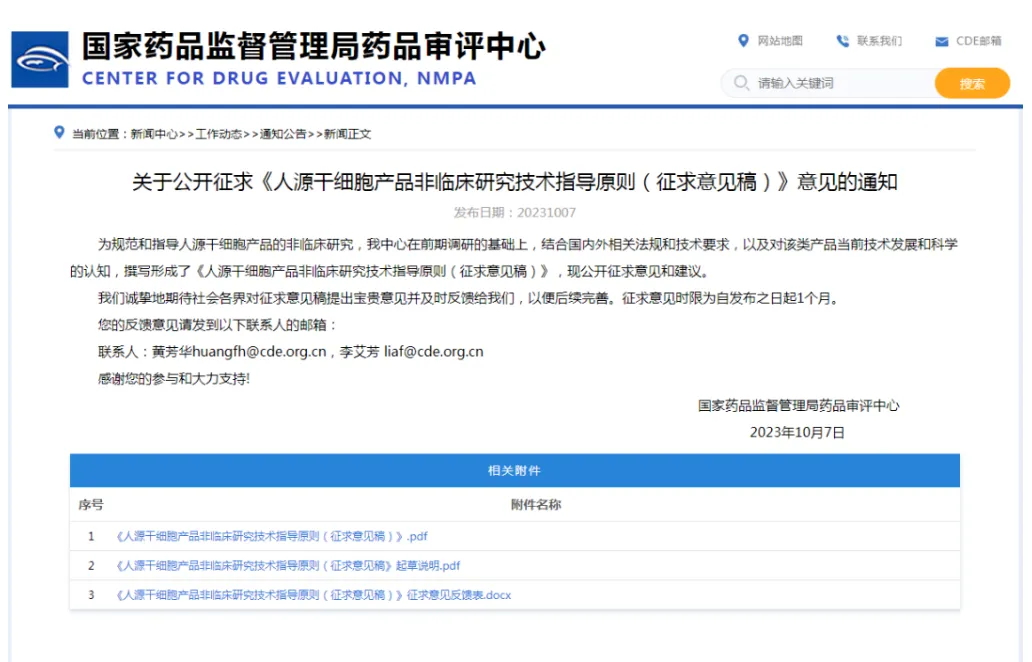
New technologies such as organoids and microfluidics included in the Guiding Principles
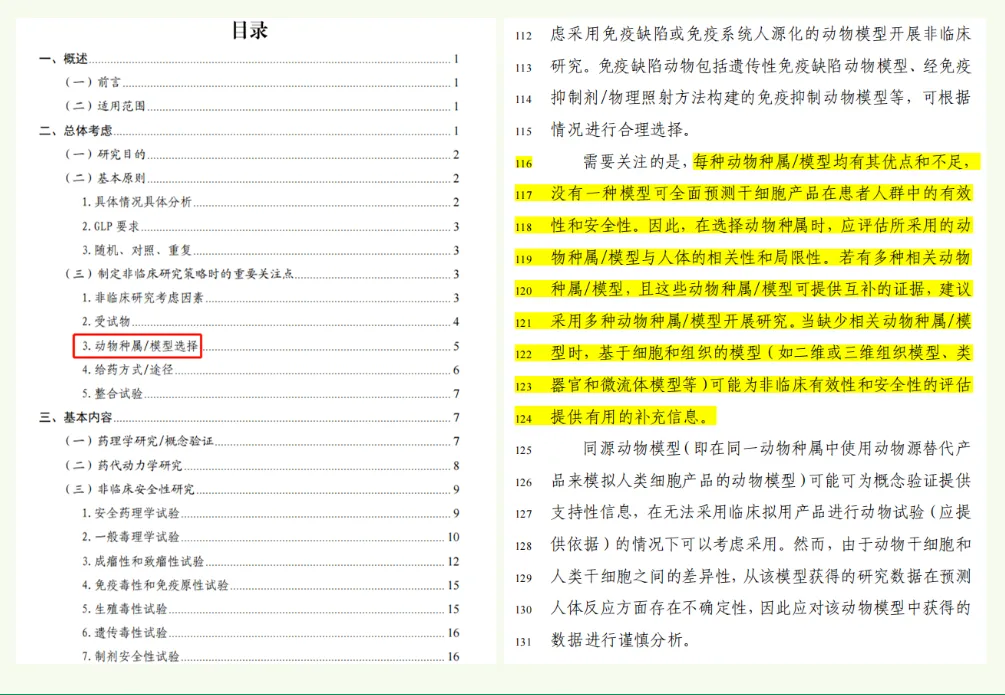
The Technical Guiding Principles for Non-Clinical Research of Human-Derived Stem Cell Products (Draft for Comments), in the chapter "Important Considerations in Formulating Non-Clinical Research Strategies", state:
Each animal species/model has its strengths and limitations; no single model can fully predict the efficacy and safety of stem cell products in patient populations. Therefore, when selecting animal species, the relevance and limitations of the chosen species/model in relation to humans should be evaluated. If multiple relevant animal species/models are available and they can provide complementary evidence, it is recommended to use multiple species/models in research. When relevant animal species/models are lacking, cell- and tissue-based models (such as 2D or 3D tissue models, organoids, and microfluidic models) may provide useful supplementary information for non-clinical efficacy and safety evaluation.
In recent years, stem cell therapy has gradually become a major hotspot in biomedicine, providing new potential treatments for many refractory diseases. More than ten stem cell products have already been marketed overseas. The number of stem cell product filings in China is growing, covering a wide variety of cell types and broad indications.
Stem cell products are an important type of cell therapy product. Their non-clinical research has its own particularities, and there are currently no targeted guiding principles or technical requirements for non-clinical research of stem cell products in China. Under these circumstances, exploring strategies for non-clinical research and evaluation of stem cell products, establishing regulatory standards, and scientifically guiding stem cell product R&D are pressing and urgent needs.
Non-clinical research is an important step in drug development. The active ingredients of stem cell products are cells with certain biological functions and varying degrees of differentiation potential. Compared with conventional therapeutic drugs, their therapeutic mechanisms, in vivo activity, and toxicity may differ significantly, and the interactions between cells and the human body are also more species-specific. Therefore, compared with conventional therapeutic drugs, non-clinical research of stem cell products has its own particularities.
The purpose of the CDE in issuing the Technical Guiding Principles for Non-Clinical Research of Human-Derived Stem Cell Products (Draft for Comments) is to standardize and guide the non-clinical research of human-derived stem cell products. Building on the technical guiding principles for non-clinical research of cell therapy products and gene-modified cell therapy products that have been issued and implemented domestically, taking into account the characteristics of stem cell products, integrating the relevant guidelines and technical requirements of international regulatory agencies/industry associations, drawing on research progress and current understanding of stem cell products, and combining China's R&D realities, the Guiding Principles set forth specific requirements for non-clinical research of stem cell products.
The scope of the Guiding Principles covers stem cells and stem cell-derived products obtained from human-origin adult stem cells (ASCs), human embryonic stem cells (ESCs), and induced pluripotent stem cells (iPSCs) through a series of in vitro operations involving stem cells, generally including expansion, gene modification, induced differentiation, and trans/de-differentiation.
In 2021, the Ministry of Science and Technology issued the Notice on Soliciting Opinions on the 2021 Project Application Guidelines for 6 Key Special Programs of the National Key R&D Program during the "14th Five-Year Plan" Period. The notice listed "Organoid-Based Disease Models of Malignant Tumors" as one of the first batch of priority key special tasks launched under the National Key R&D Program of the "14th Five-Year Plan" period;
In 2021, the Center for Drug Evaluation of the National Medical Products Administration issued the Technical Guiding Principles for Non-Clinical Research and Evaluation of Gene Therapy Products (Trial) and the Technical Guiding Principles for Non-Clinical Research of Gene-Modified Cell Therapy Products (Trial), incorporating organoids for the first time into the guiding principles for gene therapy and for gene-modified cell therapy products;
In 2022, the Ministry of Science and Technology issued the 2022 Application Guidelines for the National Key R&D Program "Stem Cell Research and Organ Repair" Key Special Project (Draft for Comments), which strongly emphasizes the great value of organoid disease models in tumor research.
Beike Biotech's organoid R&D platform
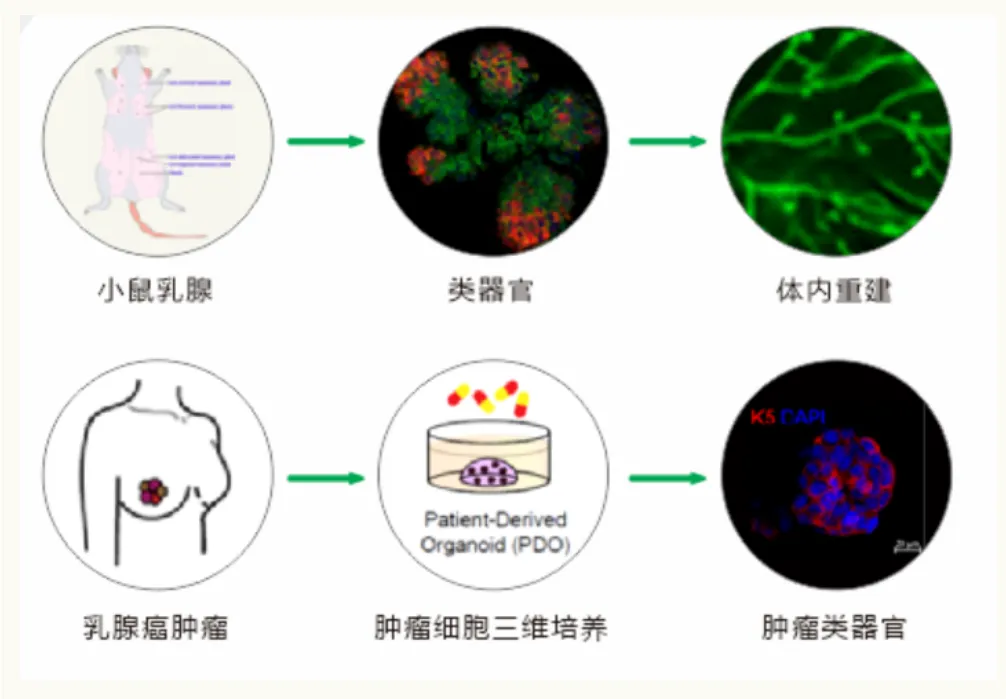
Organoids are in vitro research models derived from the three-dimensional culture of stem cells, and can be used in basic research such as regenerative medicine and disease pathogenesis, as well as in applied research such as drug sensitivity testing, personalized therapy, and drug screening.
Beike Biotech's organoid R&D platform, led by Chief Scientist Professor Cai Cheguo, is one of Beike Biotech's seven major R&D platforms.
Achievements to date
Future direction
Tumor organoid libraries from a variety of tissues will be constructed in the future to support clinical research
and technology translation for various diseases.