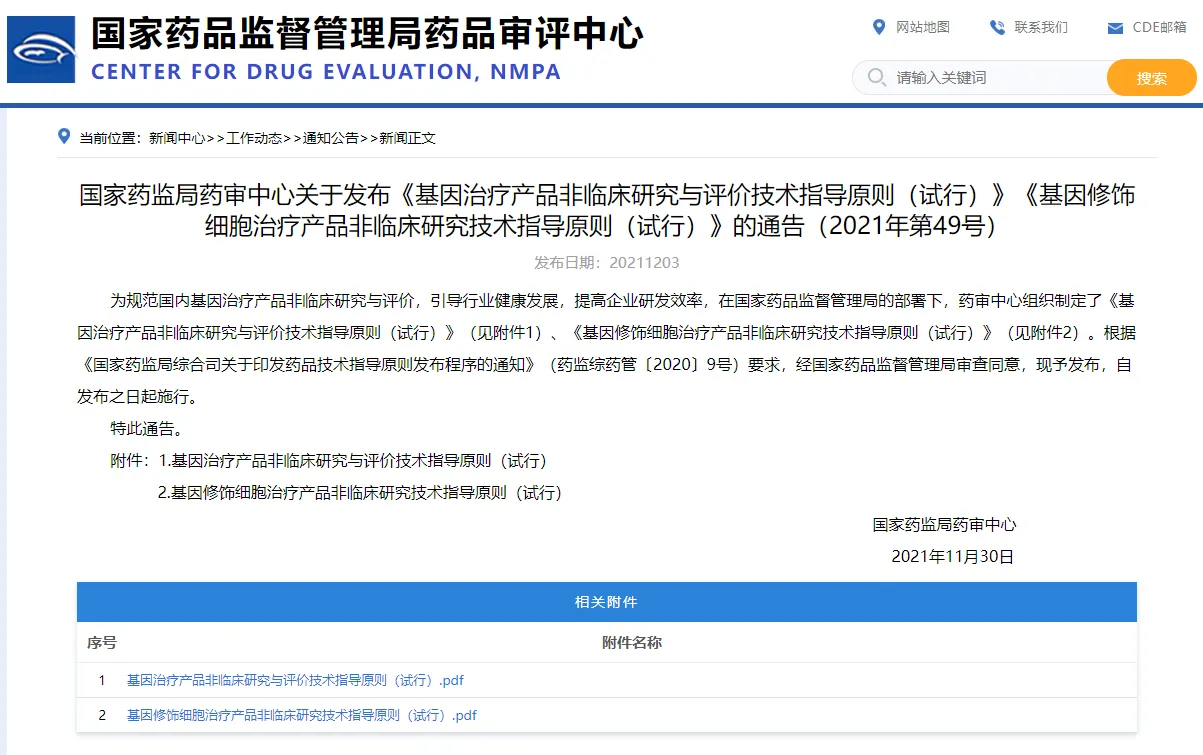
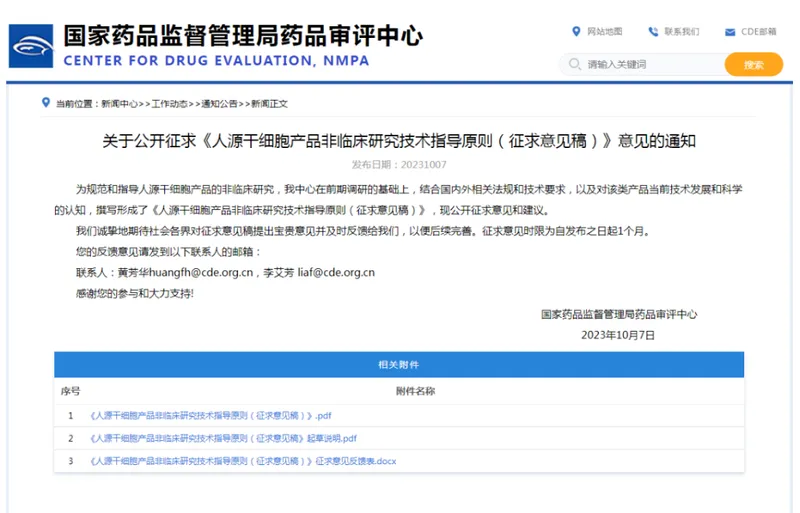
Recently, the Center for Drug Evaluation (CDE) of the National Medical Products Administration consecutively issued three guidelines related to gene therapy and cell therapy, listing organoids for the first time in the validation guidance for gene therapy and gene-modified cell therapy products.
All three guidelines take effect on the date of issuance. Specifically:
1. The "Technical Guidelines for Non-Clinical Research and Evaluation of Gene Therapy Products (Trial)" notes regarding non-clinical pharmacology research of gene therapy products: "If there is no suitable animal model to meet the needs of the trial, an appropriate animal model should be developed in accordance with scientific principles, or a more refined in vitro test system or alternative model (e.g., organoid) should be used to conduct the trial."
2. The "Technical Guidelines for Non-Clinical Research of Gene-Modified Cell Therapy Products (Trial)" notes for gene-modified cell therapy products: "When relevant animal models are lacking, cell- and tissue-based models (such as 2D or 3D tissue models, organoids, and microfluidic models) may be adopted to provide useful supplementary information for the assessment of efficacy and safety."
What are organoids?
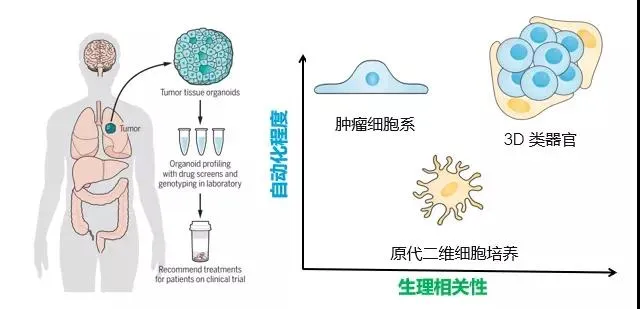
Organoids are micro-organs with three-dimensional structures cultured in vitro using adult stem cells. They are highly similar in genetic background and histological characteristics to in vivo organs, possess a complex structure resembling that of real organs, and can partially mimic the physiological functions of the source tissue/organ. By simulating the endogenous environment, they enable research in tissue biology, developmental regeneration, disease modeling, organ transplantation technology improvement, drug discovery / efficacy evaluation, and toxicology.
In plain language: by building an in vitro environment similar to that of an in vivo organ and then administering drugs in a targeted manner, one can screen for which drugs are most suitable for treatment in this environment, thereby providing patients with a reference for medication.
By obtaining tumor tissue and bodily fluid (cancerous pleural and ascitic fluid) containing tumor cells from a patient and culturing and expanding them in vitro into a "patient avatar" that can recapitulate in vivo tumor genetics and tumor biology characteristics, one obtains a tumor organoid.
In 2017, organoids were named the technology of the year in life sciences by the journal Nature Methods.
In 2021, a document from the Ministry of Science and Technology of China listed "stem cell-based models of major refractory human diseases" among the first batch of key special projects of the 14th Five-Year Plan. The document explicitly stated that malignant tumors are one of the major refractory diseases that have long seriously affected the health of the Chinese people, and that organoids, as an important emerging frontier technology, can support disease research and treatment.
Because organoids can mimic the three-dimensional structure and function of real in vivo organs, they provide a brand-new research approach and therapeutic means for precision medicine and have broad application prospects across a range of fields in biology and biomedicine. We look forward to organoids playing an ever-greater role in biology and medicine in the future.