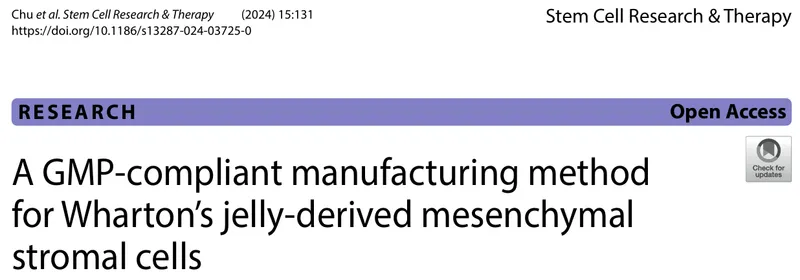
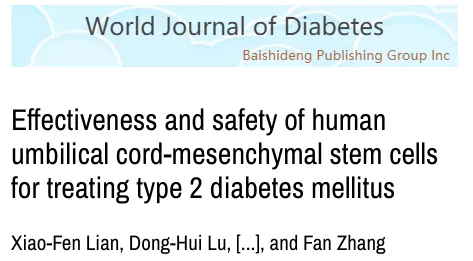
On 15 October 2022, the World Journal of Diabetes published the latest clinical research paper from Professor Zhang Fan and colleagues at the Endocrinology Department of Peking University Shenzhen Hospital. The study evaluates the efficacy and safety of intravenous infusion of human umbilical cord mesenchymal stem cells in the treatment of type 2 diabetes mellitus.
Among the 111 dual-filed stem cell clinical research projects published by China's National Health Commission, this is the first to release results on umbilical cord mesenchymal stem cells for the treatment of type 2 diabetes.
Type 2 diabetes: a pressing need for solutions
For 100 years, diabetes has been one of the major public health problems worldwide.
According to the latest data released by the International Diabetes Federation in 2022, the global adult prevalence of impaired glucose tolerance (IGT) in 2021 was 9.1%, affecting 464 million people, and is expected to rise to 10% by 2045, affecting 640 million adults. The prevalence of diabetes and prediabetes in Chinese adults is estimated at 10.9% and 35.7% respectively, with type 2 diabetes accounting for over 90%. In China in 2017, only 5.6% of type 2 diabetes patients achieved blood glucose control.

Type 2 diabetes is regarded as a chronic, progressive disease, caused by impaired pancreatic β-cell function leading to a relative decrease in insulin secretion, or by insulin resistance (IR) reducing insulin's ability to handle glucose metabolism in the body.
Current treatments for diabetes include dietary control, physical exercise, oral antidiabetic drugs and insulin therapy. Despite continual development of new drugs and dietary therapies, none can fully prevent the deterioration of β-cell function. Therefore, an effective and safe strategy to restore β-cell function in patients with type 2 diabetes is needed, and this need has yet to be met.
Multiple studies have indicated that stem cells are a potentially viable approach for the functional treatment of diabetes, but extensive multi-sample clinical trials are still needed for confirmation.
Treatment and cell preparation
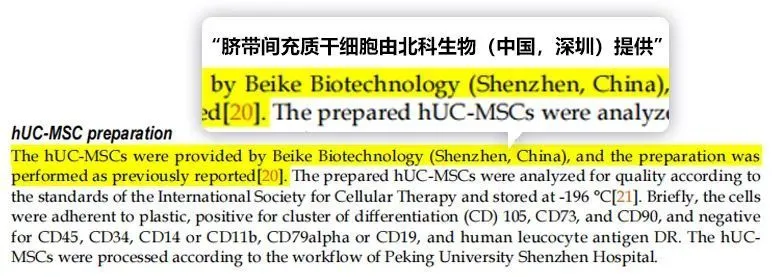
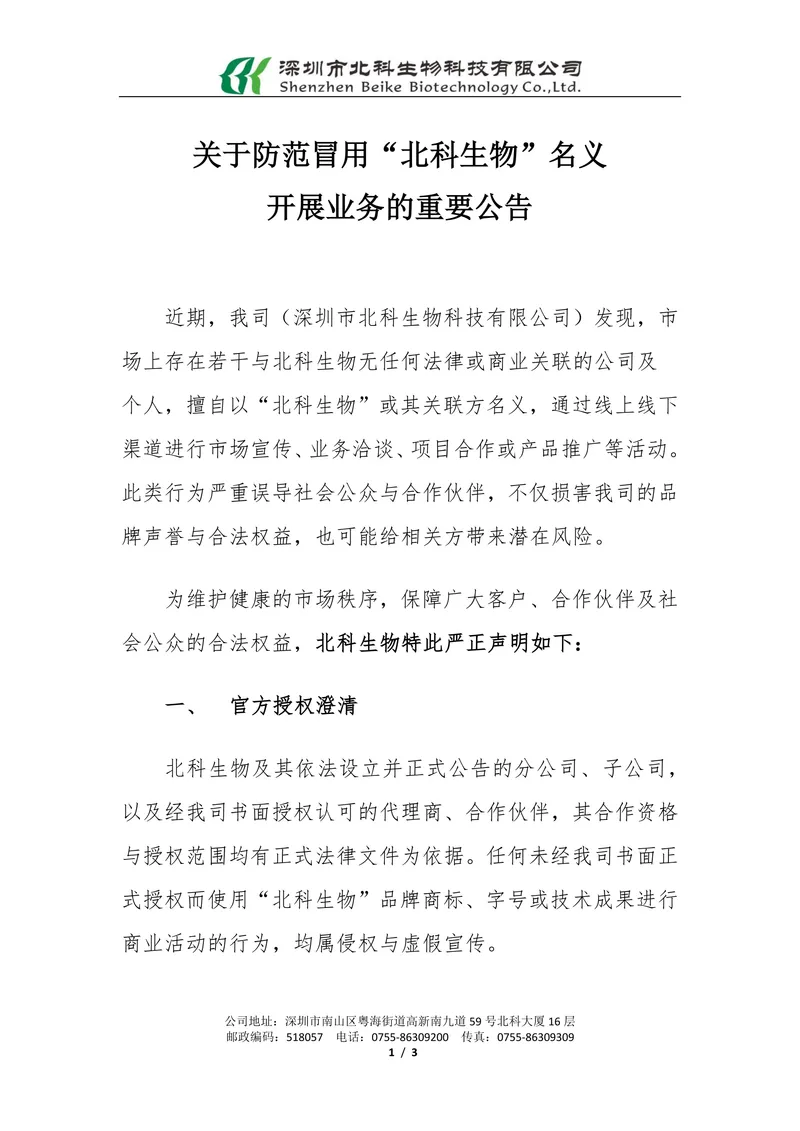
This clinical research is a National Health Commission clinical research filing project jointly applied for and approved by Peking University Shenzhen Hospital and Beike Biotech. The project entails: treating and following up patients with type 2 diabetes using umbilical cord mesenchymal stem cells, and evaluating the safety and efficacy of the therapy. The umbilical cord mesenchymal stem cells were prepared and tested by Shenzhen Beike Biotechnology Co., Ltd.
This research was approved by the Institutional Review Board of Peking University Shenzhen Hospital (IRB approval No. [2018] 29th), and all patients signed informed consent forms.
The 16 enrolled patients (inclusion criteria: diagnosed with type 2 diabetes; aged 18 to 70; HbA1c level between 7% and 9.5%) received three umbilical cord mesenchymal stem cell infusions, each one week apart, with each intravenous infusion at a dose of 1×10^6 cells per kilogram of body weight.
During the follow-up period, participants self-monitored fasting blood glucose and 2-hour postprandial blood glucose seven times per week, and oral hypoglycemic agents and insulin doses were adjusted in accordance with the patients' blood glucose to keep levels stable.
All patients underwent another medical evaluation 16 weeks later.
Efficacy assessment
1. Significant improvement in glycemic indicators
The patients' fasting plasma glucose (FPG) decreased significantly on day 14±3 without any change in the hypoglycemic dose, reaching the lowest level of the entire intervention period.
During follow-up, fasting blood glucose (FBG) continued to decline as hypoglycemic agents were reduced for all patients.
HbA1c levels decreased significantly on day 84±3.
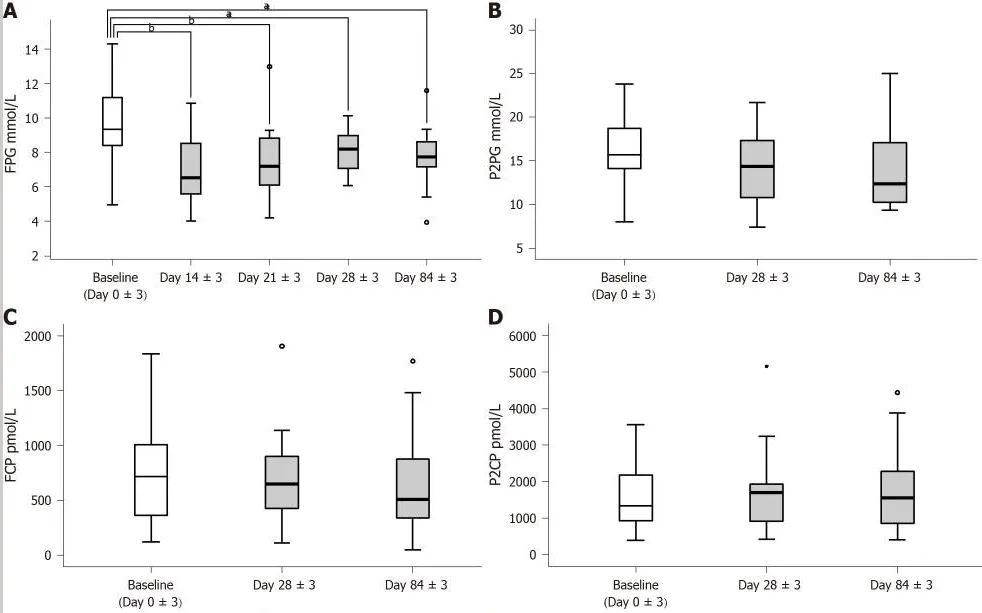
A: Fasting plasma glucose tested on days 0±3, 14±3, 21±3, 28±3 and 84±3; B-D: 2-hour postprandial blood glucose, fasting C-peptide and 2-hour postprandial C-peptide tested on days 0±3, 28±3 and 84±3.
2. Improvement of pancreatic β-cell function
The patients' β-cell function improved significantly on day 28±3.
During the subsequent intervention period, the improvement in β-cell function (HOMA-β) was stable and sustained, and hypoglycemic agents were reduced for all patients.
The insulin resistance index HOMA-IR decreased, but did not reach statistical significance.
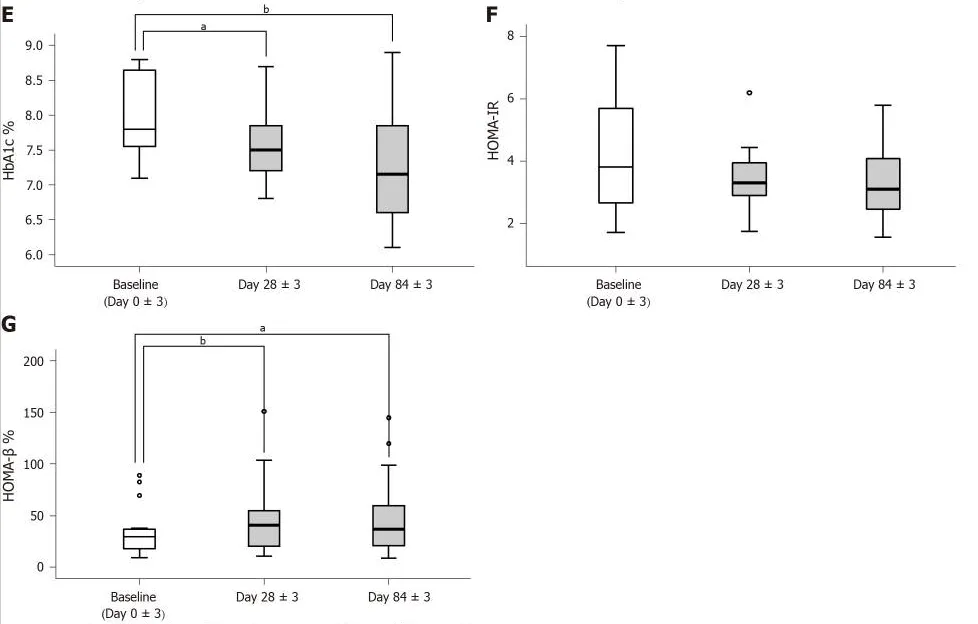
E: HbA1c levels tested on days 0±3, 28±3 and 84±3; F and G: Homeostasis model assessment of insulin resistance and homeostasis model assessment of β-cell function calculated on days 0±3, 28±3 and 84±3.
3. Reduction in hypoglycemic agent dosage
After intravenous infusion of umbilical cord mesenchymal stem cells, hypoglycemic agent doses for all patients were reduced on day 28±3, with 12 (75%) reduced by 10%–50% and 4 (25%) reduced by 50%.
By day 84±3, doses had been reduced for all patients, with 6 (50%) reduced by more than 50% and 1 (6.25%) discontinuing hypoglycemic agents altogether.
Safety assessment
White blood cell counts increased temporarily and significantly on day 14±3 after the first dose of umbilical cord mesenchymal stem cell therapy, but after the second dose there was no significant difference compared with baseline. White blood cell levels remained stable thereafter. Serum levels of alanine aminotransferase and creatinine showed no significant changes. Only 4 patients developed transient fever (5 episodes in total), occurring within 24 hours after the second or third infusion.
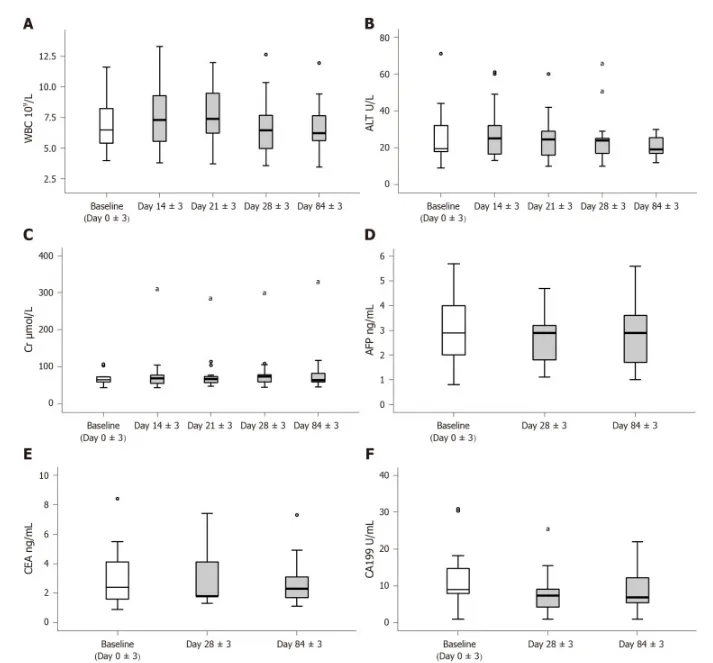
Safety evaluation of human umbilical cord mesenchymal stem cell therapy. A-C: White blood cells, liver and kidney function; D-F: Tumor-associated antigens.
After the three doses of umbilical cord mesenchymal stem cell therapy, CA199 and alpha-fetoprotein decreased only on day 28±3; carcinoembryonic antigen and other markers showed no significant change throughout the follow-up period.
Conclusion
The researchers state that this is a preliminary, exploratory study. In the future, follow-up of participants will continue for up to 3 years; in addition, more participants will be recruited and a healthy control group established to evaluate the clinical utility of this therapy in type 2 diabetes.
In summary, the results of this clinical research show that umbilical cord mesenchymal stem cell therapy can improve blood glucose, restore pancreatic β-cell function and safely reduce the dose of hypoglycemic agents required by patients.
Therefore, umbilical cord mesenchymal stem cell therapy may become a new treatment for type 2 diabetes.
References:
Lian XF, Lu DH, Liu HL, et al. Effectiveness and safety of human umbilical cord-mesenchymal stem cells for treating type 2 diabetes mellitus. World J Diabetes. 2022;13(10):877-887. doi:10.4239/wjd.v13.i10.877.