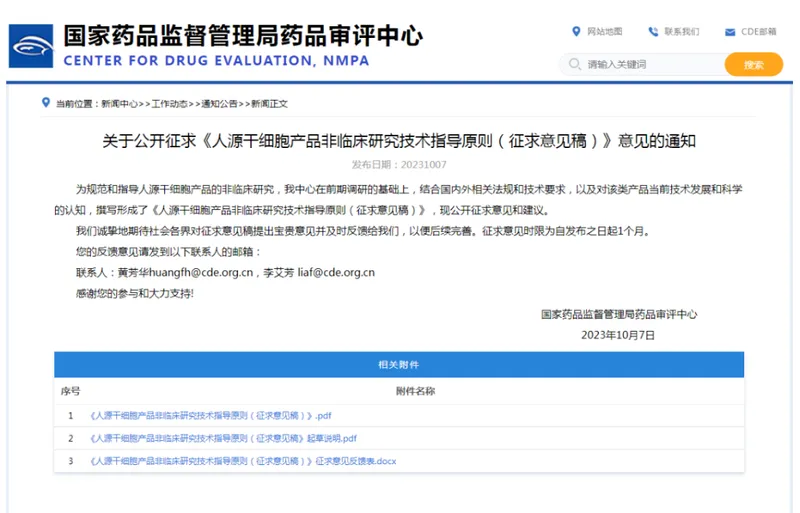
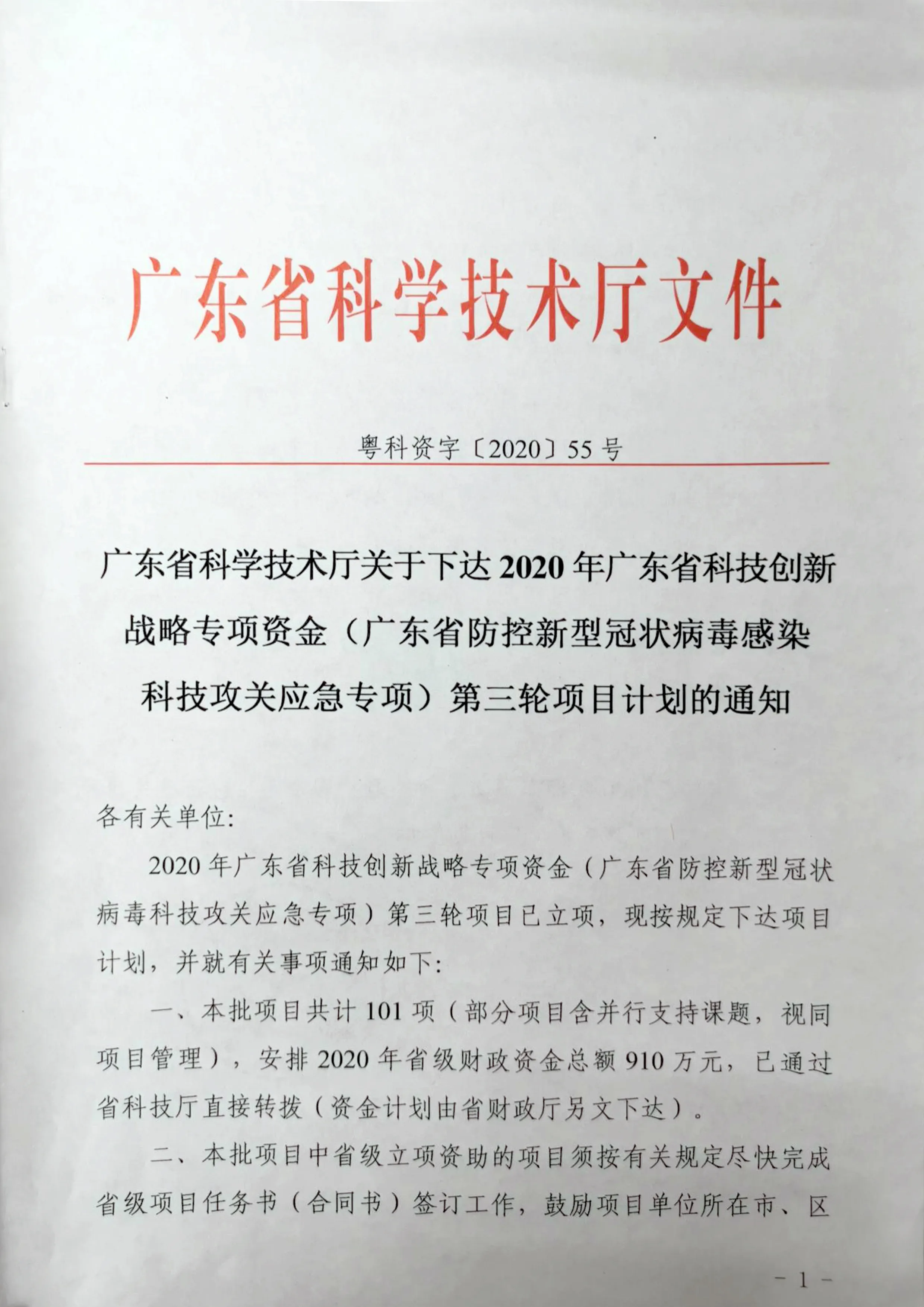
Recently, the Guangdong Provincial Department of Science and Technology announced the review results of the third round of the 2020 Guangdong Provincial Special Funds for Science and Technology Innovation Strategy (Emergency Special Project for Scientific and Technological Research on the Prevention and Control of Novel Coronavirus Infection in Guangdong Province). The three batches of projects have received over 33 million yuan in provincial financial funding. Among them, the project "Clinical Study of Human Umbilical Cord Mesenchymal Stem Cells in the Treatment of Coronavirus-Induced Severe Pneumonia", jointly submitted by Beike Biotech and the Third People's Hospital of Shenzhen — Shenzhen's only designated hospital for treating COVID-19 patients — has been approved under the Guangdong Provincial Department of Science and Technology's 2020 Guangdong Emergency Special Project for Scientific and Technological Research on the Prevention and Control of Novel Coronavirus.
The COVID-19 pandemic has wreaked havoc, taking an enormous toll on public health and the social economy. Stem cells, with their capacity for self-renewal and differentiation, have been seen since the outbreak as holding great promise for repairing lung damage in COVID-19 patients. On March 2, when General Secretary Xi Jinping inspected the front lines of scientific research and listened to a briefing on the overall situation of scientific and technological work to combat the COVID-19 epidemic, he stressed that "raising the cure rate, lowering the fatality rate, and ultimately defeating the epidemic depend on science and technology", and specifically singled out stem cells. On March 17, at the State Council's joint prevention and control mechanism press conference, Zhang Xinmin, Director of the Center for Biological Research at the Ministry of Science and Technology, said: "Stem cells can quickly relieve dyspnea in severe and critically ill patients or stop its worsening. In addition, stem cells can block the progression of pulmonary fibrosis and promote repair of lung damage, demonstrating unique advantages in preventing pulmonary fibrosis and improving the long-term prognosis of patients."
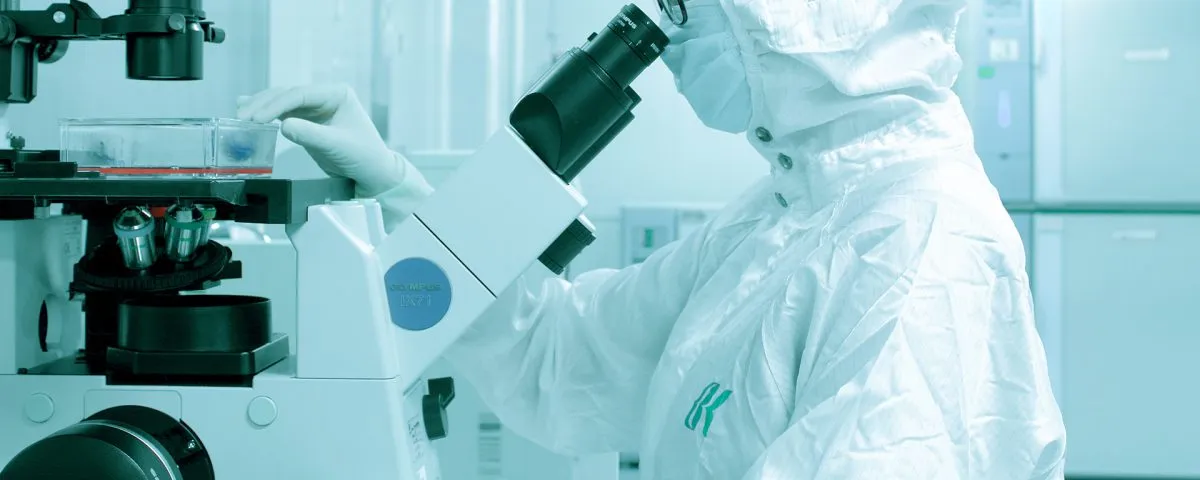
It is reported that the project submitted this time uses human umbilical cord-derived mesenchymal stem cells to treat patients with severe pneumonia caused by coronavirus. The project adopts a randomized parallel controlled design to evaluate the safety and efficacy of mesenchymal stem cells in the treatment of severe pneumonia caused by SARS-CoV-2; to compare conventional treatment combined with mesenchymal stem cell therapy versus conventional treatment alone in efficacy against SARS-CoV-2-induced severe pneumonia; and to evaluate whether the addition of mesenchymal stem cell therapy on top of conventional treatment can improve cure rates and reduce fatality rates and the incidence of sequelae such as pulmonary fibrosis. Unlike conventional drugs, cells are "living" biologics. As a novel therapeutic approach, when applied in human use the quality of cells is paramount. Even small variations during cell preparation can have a major impact on the final cell quality, thereby affecting the safety and efficacy of clinical application. The major task of standardized, large-scale preparation of clinical-grade mesenchymal stem cells in this project is undertaken by Beike Biotech.
Beike Biotech has consistently pursued R&D innovation in the cell field and has actively participated in clinical research on mesenchymal stem cells for refractory diseases. Together with clinical institutions, it has co-published more than 100 papers domestically and internationally. Beike Biotech's research achievement "Key Technology Innovation and Clinical Application of Allogeneic Mesenchymal Stem Cells in the Treatment of Refractory Lupus Erythematosus" received the 2019 National Technology Invention Award!
Further reading
1. On March 2, when General Secretary Xi Jinping visited the Academy of Military Medical Sciences and other research front lines to inspect scientific research work on COVID-19, he stressed: "Winning the people's war, the all-out war, and the war of resistance against the epidemic still requires hard efforts. The more we face this kind of situation, the more we must look to science for answers and methods. Scientific research must treat the rescue of severe and critically ill patients as the top priority, strengthen the deployment of scientific research to support and serve frontline rescue, insist on the coordination of clinical research and clinical rescue, and direct more research outcomes toward clinical front lines. We must explore new therapeutic approaches and do everything possible to prevent the conversion of mild patients to severe ones; we must adopt advanced therapies such as convalescent plasma, stem cells, and monoclonal antibodies, raise the level of severe and critically ill patient care, and reduce the fatality rate as much as possible."
2. The National Science and Technology Awards Conference is the highest honor in China's scientific community. Among them, the National Technology Invention Award has long been a bellwether for major scientific and technological discoveries and inventions. Beike Biotech's receipt of this distinction was based on its successful breakthroughs in the application of mesenchymal stem cells for the treatment of systemic lupus erythematosus and other autoimmune diseases (the ARDS that occurs in COVID-19 is itself a form of autoimmune response): how to obtain standardized, high-quality, safe, clinical-grade allogeneic MSCs and how to evaluate the safety and efficacy of allogeneic MSCs in the treatment of refractory SLE. This rests on Beike Biotech's consistent leadership in standardized cell preparation and the establishment of a complete cell quality control process, thereby driving the entire stem cell industry toward greater standardization, normalization, and scale.
3. On March 3, 2020, Shenzhen issued multiple documents focused on the development of the stem cell industry. The Guiding Opinions on Promoting the Clustered Development of the Biopharmaceutical Industry in Shenzhen, two supporting documents, and the Several Measures on Promoting the Clustered Development of the Biopharmaceutical Industry in Shenzhen all mention the development of biotherapy technologies such as stem cell therapy, immunotherapy, and gene therapy; the strengthening of regulatory system construction; and the construction of a city-wide, uniformly-standardized quality monitoring platform; as well as actively promoting the translation of research achievements and supporting the construction of clinical research and translational application platforms for somatic cell therapy.
4. Beike Biotech has a strong R&D team in the field. To date, it has filed 189 patent applications in biomedicine, 60 of which have been granted; undertaken more than 60 national, provincial, and municipal research projects, including 863 Program projects and Torch Program projects; and published 100+ papers in cell-related fields, including 40+ SCI papers, with cumulative impact factors (IF) of more than 200.