The 2024 latest research from Beike Biotech's empowered stem cell technology platform
has been published
in the leading international journal Cell & Bioscience!
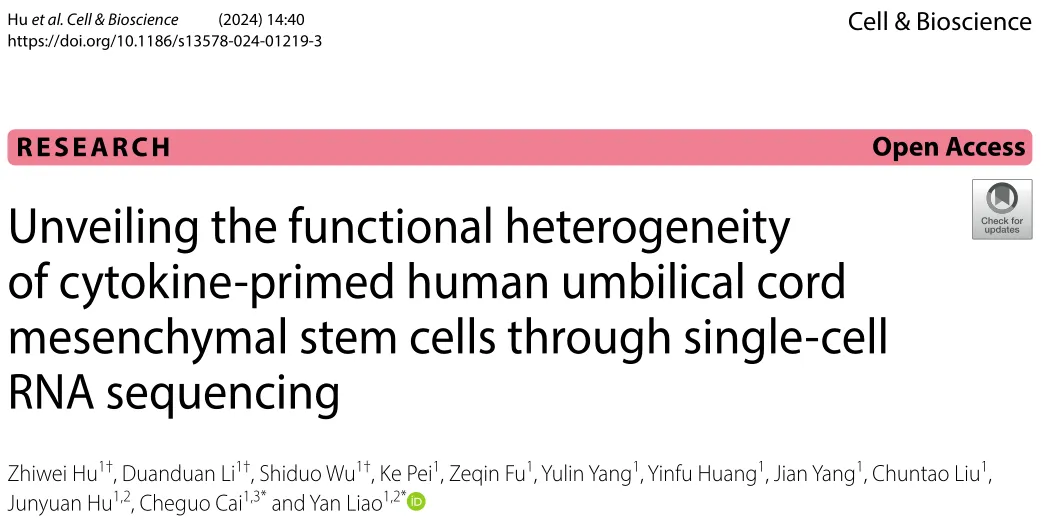
Recently, the team led by Professor Cai Cheguo and Dr. Liao Yan at the Shenzhen Beike Biotechnology Co., Ltd. R&D Center published its latest basic-research paper online in the leading international journal Cell & Bioscience (impact factor 7.5). The paper is titled: "Unveiling the functional heterogeneity of cytokine-primed human umbilical cord mesenchymal stem cells through single-cell RNA sequencing".
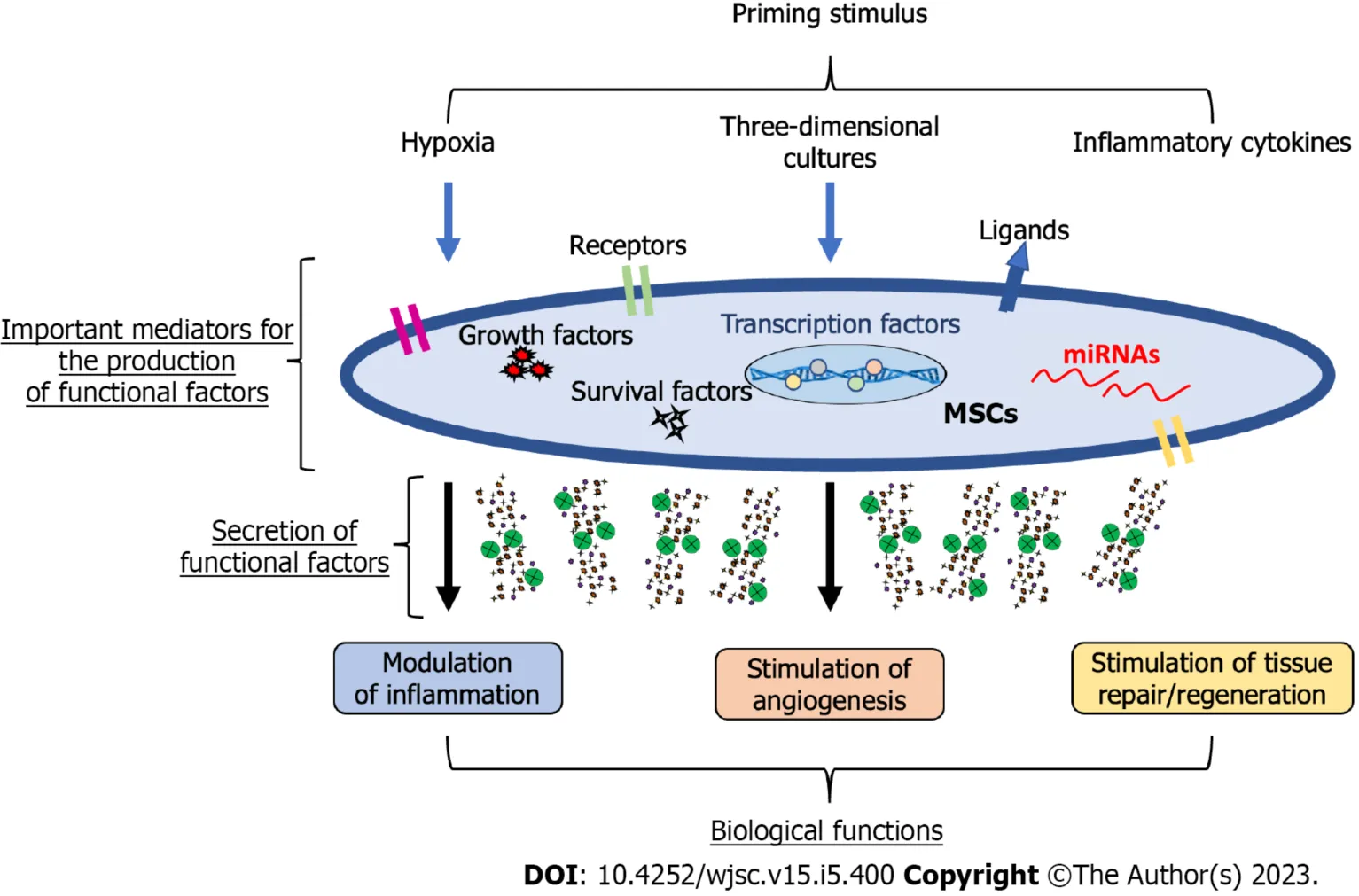
Mesenchymal stem cell (MSC) therapy has shown remarkable efficacy in a variety of diseases, particularly in those mediated by immune-inflammation and tissue injury, primarily due to the immunomodulatory and tissue-repair-promoting effects of MSCs. Clinical data show that MSC therapeutic outcomes vary clinically, which may be related to differences in disease microenvironment, individual patient differences, and MSC heterogeneity, among other factors[1]. Based on reports of MSC plasticity and disease microenvironment, several methods can enhance the biological functions of MSCs, including induction with inflammatory factors, hypoxia induction, and three-dimensional culture[2]. Empowering MSCs with inflammatory cytokines is regarded as one of the most common ways to mimic the in vivo inflammatory microenvironment and can effectively improve the immunosuppressive function of MSCs (as shown in Figure 1). It is therefore of great importance to study how various technical approaches can optimize and selectively enhance the biological functions of MSCs to improve therapeutic efficacy, particularly the development of patient-tailored empowered MSCs.
In this study, the team used 6 inflammatory cytokines to "empower" umbilical cord MSCs in vitro and then performed single-cell transcriptome sequencing. Bioinformatics analyses revealed that: IFN-γ-empowered MSCs effectively enhanced their immunoregulatory capacity, suppressing immune cell proliferation and the expression of pro-inflammatory factors by secreting more immunoregulatory molecules (IDO1, PD-L1, etc.); TNF-α-empowered MSCs effectively enhanced their chemotactic potential, releasing various chemokines (CCL2, CXCL1, etc.) to recruit immune cells closer to MSCs; IL-4-empowered MSCs effectively enhanced their collagen-secretion capacity, producing a wider variety of collagens (COL1A1, COL5A1, etc.) and contributing to the repair of damaged tissues (as shown in Figure 2). At the same time, we also found that empowering with IFN-γ and TNF-α can reduce the cellular heterogeneity of umbilical cord MSCs, which can provide more uniform stem cell products for the clinic.
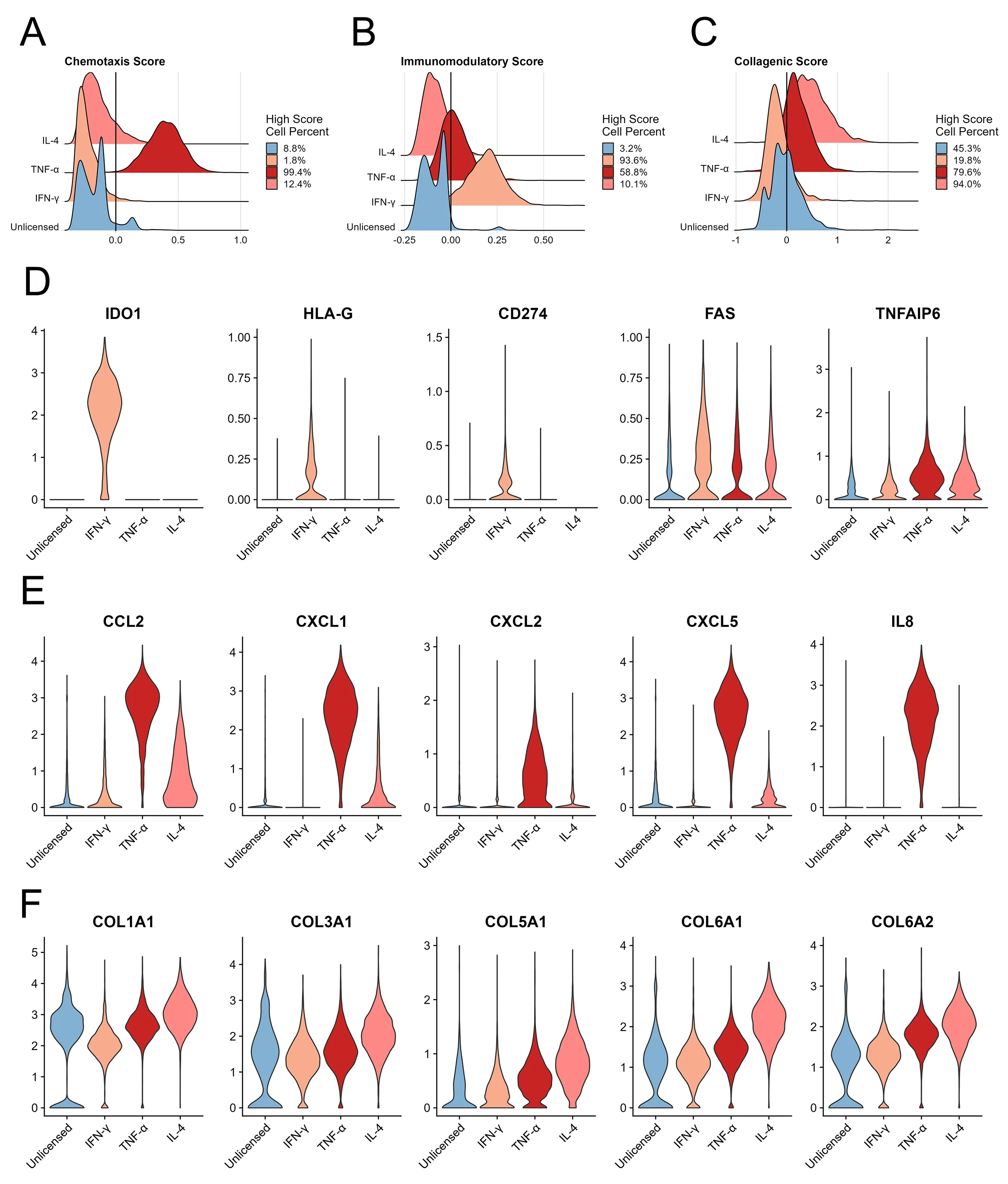
Figure 2: Inflammatory cytokine empowerment of MSCs enhances multiple specific biological functions
The study constructed cell maps of inflammatory-cytokine-empowered MSCs. MSCs empowered with different inflammatory cytokines exhibited specific biological functions, indicating their varied clinical application value. These findings provide new insights for understanding the in vivo biological functions of MSCs and their precision-therapy applications, lay a theoretical foundation for advancing umbilical cord MSC therapeutic strategies and quality control, and have profound significance for the basic research and clinical application of umbilical cord MSCs.
The publication of this paper fully demonstrates Beike Biotech's strength in scientific research and technological innovation, and provides important theoretical evidence for the clinical translation of empowered mesenchymal stem cells. The first author of the paper, Hu Zhiwei (Master of Biomedical Engineering from Hunan University and an R&D engineer at Beike Biotech), is skilled in using bioinformatics to analyze and predict stem cell biological functions, providing important support for the R&D of new stem cell technologies and fully reflecting Beike Biotech's strategy of building a diversified technical talent pool in R&D.
Paper link:
https://cellandbioscience.biomedcentral.com/articles/10.1186/s13578-024-01219-3
References:
[1] Mehdi, Najar, Rahma, Melki, Ferial, Khalife, et al. Therapeutic Mesenchymal Stem/Stromal Cells: Value, Challenges and Optimization. Front Cell Dev Biol. 2022:9:716853.
[2] Vitale, Miceli, Giovanni, Zito, Matteo, Bulati, et al. Different priming strategies improve distinct therapeutic capabilities of mesenchymal stromal/stem cells: Potential implications for their clinical use. World J Stem Cells. 2023;15(5):400-420.