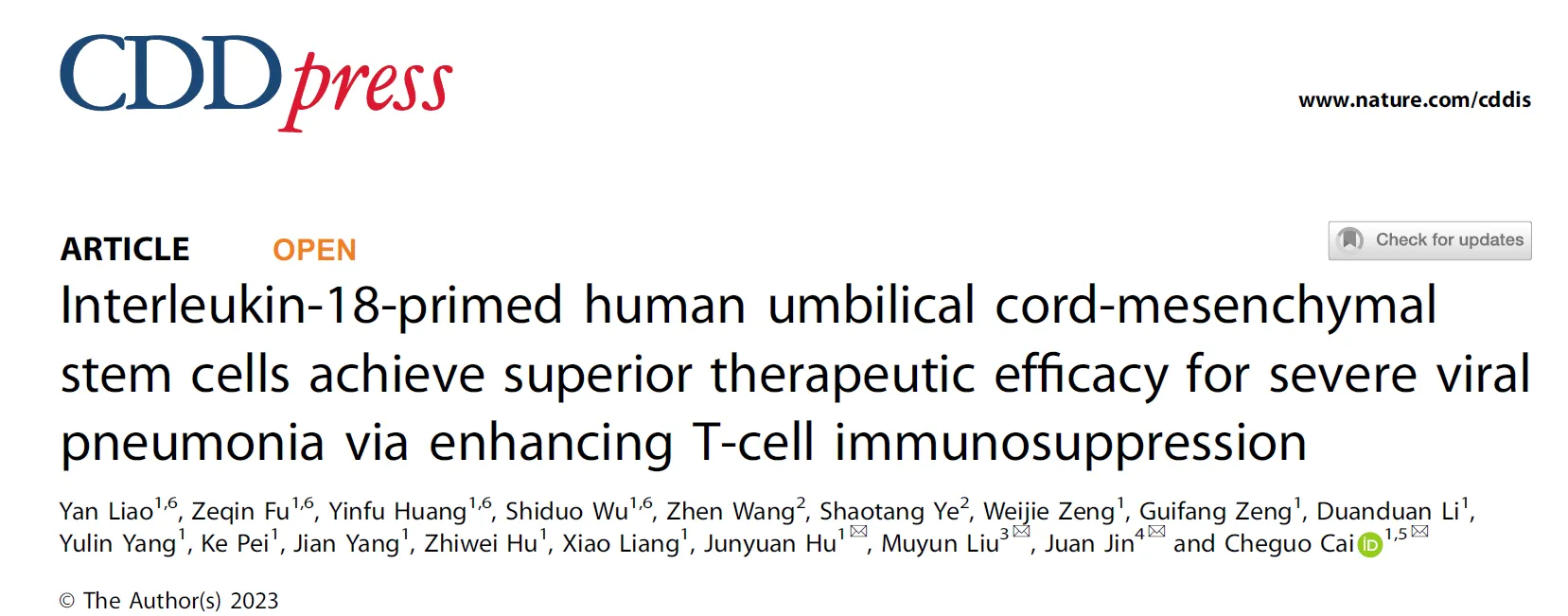
On 28 January 2023, Professor Cai Cheguo and Dr. Liao Yan's team at the R&D Center of Shenzhen Beike Biotechnology Co., Ltd. published online in the international authoritative academic journal Cell Death & Disease (impact factor 9.68, CAS Q1) their research showing that umbilical cord mesenchymal stem cells primed with the inflammatory factor IL-18 can enhance the therapeutic efficacy of treatment for lung injury caused by severe viral pneumonia. The paper is titled "Interleukin-18-primed human umbilical cord-mesenchymal stem cells achieve superior therapeutic efficacy for severe viral pneumonia via enhancing T-cell immunosuppression". In recent years, the translation of Beike Biotech's research achievements has steadily advanced, reflected not only in "growth in quantity" but, more importantly, in "qualitative leaps". Beike Biotech's continuing breakthroughs in publishing high-level papers, particularly in international authoritative journals, are a clear demonstration of its research strength and capacity for technological innovation.
(Paper link: https://www.nature.com/articles/s41419-023-05597-3, please click "Read original" at the end of the article to view).
The novel coronavirus that broke out at the end of 2019 is a virus to which the population is generally susceptible. It mainly affects the lungs, with infection characterized by fever, dry cough, shortness of breath and inflammatory changes in the lungs. With no effective therapeutic drugs against COVID-19 infection, clinical care relies primarily on symptomatic and supportive treatment. After pneumonia in some patients enters a progressive phase, they may develop acute respiratory distress syndrome that endangers life. As the body's own immune cells recognize and attack the virus, severe patients may experience a strong immune response, with the lungs producing a wide variety of inflammatory cytokines in large quantities. The body's immune balance breaks down, ultimately resulting in serious damage to the lungs and severe respiratory dysfunction (Figure 1).
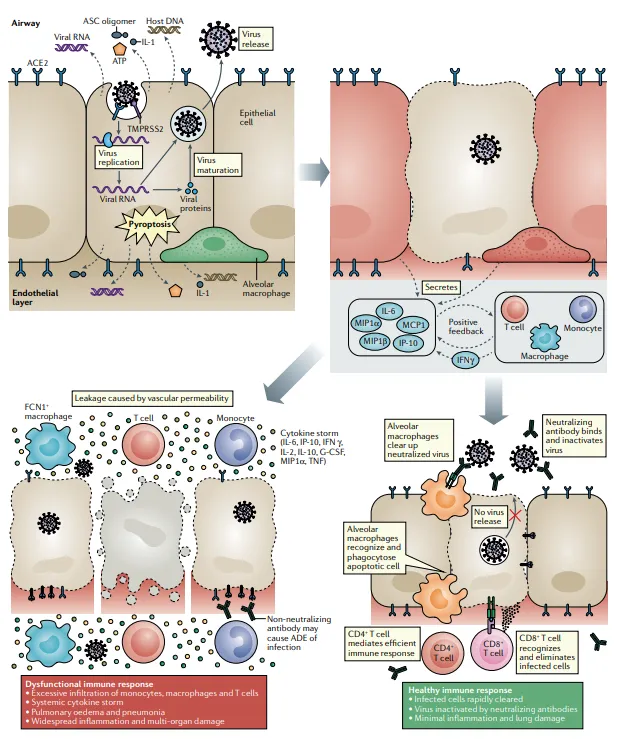
Figure 1: Immune regulatory mechanisms following novel coronavirus infection
Currently, mesenchymal stem cells (MSCs), as a class of adult stem cells with strong clinical application value, are widely studied for their function in many different types of clinical disease, performing especially well in clinical research related to immune regulation. They can effectively regulate the immune environment of patients, control inflammation levels and thereby reduce damage caused by excessive inflammation. Although various studies have shown that MSCs deliver excellent therapeutic effects in clinical research, there is still real-world variation in efficacy across different patient populations. This may, on the one hand, be due to the heterogeneity of MSCs: MSCs from different donors or generated by different preparation methods all show cellular heterogeneity, which can result in slight differences in stem cell function and therapeutic effect. Therefore, scientists have sought to identify specific functional subgroups of MSCs, or to research available technical means to optimize the biological functions of MSCs from different sources, making them more uniform, "younger" and more strongly endowed with specific functions, and ultimately demonstrating improved efficacy against specific diseases and higher rates of clinical remission.
In this study, the researchers found that priming umbilical cord MSCs with the inflammatory factor IL-18 during in vitro culture can effectively enhance their immune regulatory effect on T cells in vitro; in vivo, this alleviates severe virus-induced pulmonary inflammation, thereby reducing lung injury, improving survival in viral pneumonia model mice and improving multiple clinical manifestations (Figure 2).
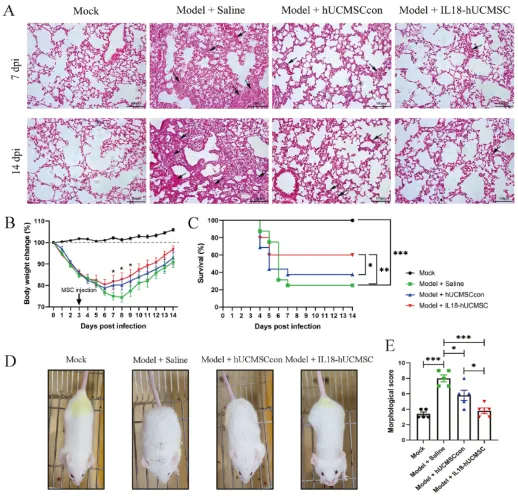
Figure 2: IL-18-primed MSCs significantly improve treatment efficacy in viral pneumonia mice
This research was funded by the Guangdong Province "Science and Technology Helping the Economy 2020" Key Special Project and the Guangdong Basic and Applied Basic Research Foundation General Project (2021A1515011108). It is of great significance for advancing the application of umbilical cord MSCs in the clinical treatment of viral pneumonia patients, especially severe and critical patients. At the same time, the new technology developed in this study for preparing primed MSCs raises the technological bar in the stem cell industry and enhances the company's market competitiveness. Beike Biotech holds full intellectual property protection over this technology, which forms a new product pipeline in Beike Biotech's future plans for precision treatment.